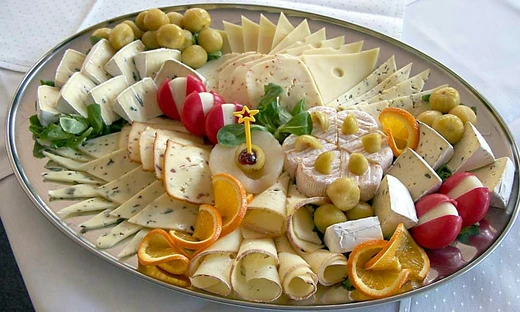
Stilton
Village that gave its name to Stilton cheese.

Wikipedia / Wikimedia Commons
Stilton is a village and civil parish in Cambridgeshire, England, about 12 miles north of Huntingdon in Huntingdonshire. It is historically significant as the namesake of Stilton cheese, though the village itself is not licensed to produce the cheese under its protected geographical status. The village's development was shaped by its location on the Roman Ermine Street, later the Great North Road, making it a coaching stop with numerous inns.
- location
- Cambridgeshire, England
- historic_county
- Huntingdonshire
- population_1086_estimate
- 35–50
- population_2011_parish_area
- 1,633 acres (661 hectares)
- known_for
- Namesake of Stilton cheese; coaching inns; cheese-rolling race
Lore & Background
Stilton shows evidence of Neolithic occupation and Roman finds, including a silver ring, a 2nd-century jug, a potential Roman settlement, and a Roman cheese press. In the Domesday Book of 1086 it was listed as Stichiltone or Sticilitone in the Hundred of Normancross, Huntingdonshire, with three manors, ten households, and an estimated population of 35–50. The name Stilton means 'village at a stile or steep ascent'.
The Roman Ermine Street, later the Great North Road, was integral to the village's growth. By late medieval times it was a popular posting station and coaching stop, with 14 public houses for a population of around 500. The Bell Inn (recorded since 1515, rebuilt 1642) and the Angel Inn (early 17th century, rebuilt in the 18th century) were the main inns. Fires damaged the village in 1729, 1798, and 1895.
Stilton's reliance on the Great North Road led to decline when the railway arrived in the 19th century and when a 1.25-mile A1 bypass opened on 21 July 1958. The Bell Inn closed and many businesses were lost. To revive interest, the first cheese-rolling race was organized on Easter Monday 1962, becoming a popular annual event until its cancellation in 2018 due to declining interest and uncontrollable behavior; it was brought back in 2024.
Reader's Guide
Stilton's significance lies in its connection to Stilton cheese, a name derived from the village where the cheese was sold at coaching inns, as noted by Daniel Defoe in 1722. The cheese is now produced only in Derbyshire, Leicestershire, and Nottinghamshire under Protected Geographical Status (1996), but recent evidence suggests cheese may also have been made locally. The village's history as a coaching stop on the Great North Road shaped its economy and led to the creation of the cheese-rolling race, a modern tradition. Stilton's governance has evolved from the historic county of Huntingdonshire through Huntingdon and Peterborough (1965) to Cambridgeshire (1974). The village is twinned with Saint-Christol-lès-Alès in France.
Did You Know?
- The Domesday Book records Stilton as Stichiltone or Sticilitone, meaning 'village at a stile or steep ascent'.
- A Roman cheese press was found in the village, suggesting early cheese-making activity.
- The first cheese-rolling race was held on Easter Monday 1962, organized by Tom McDonald and Malcolm Moyer.
- Stilton is not licensed to make Stilton cheese, as production is limited to Derbyshire, Leicestershire, and Nottinghamshire.
More in Cheese 1-18
Spotted an error? Know more?
This is a living reference — every entry is fact-audited, and reader corrections feed straight into our audit queue. Suggest an edit · See this site's audit record